Monday, March 25, 2013

Royal Potato Salad

 (from Plenty, by Yottam Ottolenghi)

Contrary to what the infrequency of posts lately might indicate, La Piccina Cucina is still alive and well. At least, still functioning. I've been cooking plenty, just not many new things. And I have a long list of recipes I haven't gotten around to yet, because, well, there's just an awful lot of fun, new things to do here in California. There is also a lot of incredible food to be eaten. Hooray!

Anyway, this I actually made tonight! And it was good enough that I wanted to go straight to the computer to write it up. It's from this amazing vegetarian cookbook, Plenty, which has the most beautiful, interesting, I-want-to-try-that recipes. Seriously, I want to make like everything in that book.

So first, I made this. At its most basic level, it's potato salad with pesto sauce. That already would be great. But it also adds quail eggs, and whaddya know, Berkeley Bowl sells them. And we pass by them every week, and want to buy them but have no idea what to do with them, until now.

Served this with broiled pork chops that sat in a nice sugar-salt-balsamic brine (brine recipe here) all day, then got popped in the oven with some mini lemon slices from the tree out back (eeee!!!).

For 4-6 (I halved it, ish):
15 quail eggs
1 cup petite peas (frozen)
1 3/4 lbs new potatoes, washed (I don't know what "new" potatoes means. I just bought small ones.)
1 cup basil leaves
1/2 cup parsley leaves, plus some extra for garnish
1/3 cup pine nuts
1/2 cup grated Parmesan
2 garlic cloves
1 cup olive oil
1/2 tsp white wine vinegar (I completely forgot to add this, btw)
1 bunch sorrel leaves, finely shredded (he says you can also use mint, which I think would be really interesting - I couldn't really taste the sorrel)
Salt and black pepper

Place the quail eggs in a small pot, cover with water, and bring to a boil. Simmer between 30 seconds and 2 minutes, depending on if you want them soft- or hard-boiled. Put them in cold water; peel them when you have a pause in the action.

Start the water boiling for the potatoes. When it boils, blanch the peas in the water for about 30 seconds, then drain and run under cold water. Set them aside for now.

Cook the potatoes until they're soft, about 15-20 minutes. You want them warm, ideally, when you put them in the sauce.

Make your pesto sauce while the potatoes cook. Put the basil, parsley, pine nuts, Parmesan, and garlic in a food processor and process to a paste. Add the olive oil and blend in the processor. Pour the pesto into the bowl in which you'll serve the salad.

Drain the potatoes, and cut in halves as soon as they won't scald you to touch (this can be a good time to peel the eggs). Add the potatoes to the bowl with the pesto, and toss with vinegar, sorrel, and peas. Mix well. Salt and pepper to taste.

Cut the eggs in half and gently mix them into the salad. Garnish. Eat.


Sunday, January 27, 2013

French Toast with Cherry-Mandarin Jam and Mascarpone


(adapted from Mark Bittman's How to Cook Everything app)

My first post from our new computer...we've made the switch to Mac and are loving it!

In other exciting news, it was French toast for breakfast this AM...and, Joef made a new batch of jam! We're calling it "Old Fashioned" - it's cherries, satsuma mandarin oranges, and bourbon. And it is incredible.

Other than that - and the mascarpone cheese spread on top, a trick our friends Sanjin and Mary taught us - it's just your typical French toast. I've just never made it before. But it'll be on the Sunday breakfast roll going forward. Absolutely delicious.

2 cups milk
4 eggs
2 tsp vanilla
Dash of salt
8 or more slices French bread/baguette
Butter
Mascarpone cheese
Old Fashioned jam (or other)

Preheat your oven to 250. Mix the milk, eggs, salt, and vanilla together in a large, wide bowl. Slice your bread to the desired thickness, and let the bread soak in the batter. In the meantime, butter a griddle (or a pan on the stove), and let it get nice and hot and sizzling.

Place each piece of bread on the griddle. When it gets nice and browned, flip to the other side, and let it get nice and brown, too. Continue to flip for up to 10 minutes or so. To make sure the egg has cooked all the way through, you can pop the pieces into the oven and let it cook 10-15 minutes.

Spread with mascarpone and jam. Happy Sunday!

AND SPEAKING OF JAM:
4 pounds of cherries, pitted
3 pounds satsuma mandarins, peeled and chopped
7 cups sugar
1 1/4 cups bourbon
Juice of 4 lemons

For instructions on how to put these ingredients together for amazing jam, see: http://piccinacucina.blogspot.com/2012/10/homemade-jam.html.


Saturday, January 5, 2013

Vietnamese Five-Spice Chicken and Coconut-Mango Rice

(adapted from Williams-Sonoma's San Francisco: Authentic Recipes Celebrating the Foods of the World, and Fred Thompson's Grill Master: The Ultimate Arsenal of Back-to-Basics Recipes for the Grill)

OK, so I'm not even going to tell you the first time I made this. I'm that behind. I can't even remember. BUT! I've made it three times since that first attempt, because it is so, SO good. I mean, crazy-delicious, finger-licking good. I made it around Thanksgiving for the fam, and it was a hit - even my one-year old nephew was smacking his lips. It might just be my favorite grilled chicken recipe. And I've always been a fan of coconut rice.

I hadn't really heard of five-spice till we moved to the Bay Area. You can make your own, or you can buy it from the grocery store (win!). To me, the ingredients are surprising - star anise, cinnamon, cloves - sweet stuff - but in this recipe, you add fish sauce, which combines to make this sweet, salty, savory, marinade. Mmm.

So, here's what you need (this should be enough marinade for a whole chicken, but I use the same amount for five-six drumsticks...):
6 cloves garlic, halved
1 large shallot, quartered
1 tbsp peeled ginger
4 tsp sugar
1/4 cup soy sauce
1/4 cup fish sauce
1/2 tsp five spice powder
Freshly ground pepper
5-6 chicken pieces - thighs or drumsticks

And here's what you do:
Combine the garlic, shallot, ginger, and sugar in a small food processor, and process to form a paste. Transfer to a bowl and whisk in the soy sauce, fish sauce, five spice powder, and a few grinds of black pepper. This is your marinade.

Rinse the chicken pieces in cold water and pat dry with paper towels. Place in a shallow dish, and pour in all the marinade. Turn the pieces in the marinade to coat, cover, and refrigerate for as long as possible, up to 8 hours (2 hours work in a pinch). You'll want to turn the chicken a few times. Keep the marinade.

Set up your grill!

Remove the chicken from the marinade (don't throw it out), grill the chicken, and baste it with a marinade a few times. Turn the chicken, baste again, grill until juices run clear. Don't baste the chicken in the final 10 minutes.

Done!

And for the rice (from Grill Master):
1 tbsp canola oil
1 large shallot, minced
1 tsp peeled, grated fresh ginger
2 cups jasmine rice (brown rice works, too)
1 cup coconut milk
Salt
1 (or 2) mango, cubed

In a large saucepan over medium-high, warm the oil. Add the shallot and ginger and saute for about 30 seconds. Add the rice and stir to coat and mix. Add 2 cups water, the coconut milk, and salt. Bring to a boil. Reduce heat to low, cover, simmer for about 20 minutes - just like you'd normally cook rice.

When done cooking, stir/fluff with a fork, then add the mango and stir that in, too. 

(Green beans - blanched, with olive oil, salt, pepper.)


Sunday, December 2, 2012

Brine-Cured Pork Chops with Balsamic Glaze

Thanks to a couple of great cookbooks, I've discovered a whole new way to prepare pork chops - brining! Now, I'm sure this is old news to most cooks out there; I may be late to the game, but at least I showed up! You basically give the chops a salt and herb bath for a good half a day, or at least a few hours, and it tenderizes the pork and keeps it nice and juicy when you cook it. It works great for pan-cooking the chops, or grilling.

This particular recipe features shallots sauteed in balsamic vinegar - it's a pungent combination, and delicious with the pork. The recipe is adapted from this fantastic cookbook my parents got me last Christmas, that I'm practically reading like a novel - Williams Sonoma's "San Francisco: Authentic Recipes Celebrating the Foods of the World". It gives a great overview of food in the Bay Area, then recipes! Not 100% sure what makes this a Bay Area recipe, but hey! It's delicious, so I'll buy it.

BRINE: from Fred Thompson's "Grill Master: The Ultimate Arsenal of Back-to-Basics Recipes for the Grill":
1/4 cup cider vinegar
1/4 cup firmly packed brown sugar
1 tsp thyme
1/8 tsp red pepper flakes
2 tbsp salt
1 tbsp black pepper
6 cups water

In a large bowl, combine water, vinegar, sugar, thyme, pepper flakes, salt, and pepper, and stir until sugar and salt dissolve. Submerge pork chops in brine, cover with plastic wrap, and refrigerate for as long as possible.

CHOPS:
2-4 center cut pork loin chops, about 1 1/2 inches thick
1 tbsp olive oil
2 tbsp unsalted butter
1/4 cup minced shallot
2 tbsp balsamic vinegar
1 cup chicken stock
1 tbsp minced fresh sage

Preheat the oven to 200 degrees. Remove the chops from brine and pat dry.

Place a large frying pan (big enough to hold all the chops in a single layer) over medium-high heat until hot, then add olive oil and swirl to coat the bottom of the pan. When the oil is hot, add the chops and reduce heat to medium. Cook until the bottoms are browned, about 10 minutes. Flip and cook until the chops are no longer pink at the bone, about 10 more minutes. Put the chops on a heatproof platter, and keep in the oven to warm.

Pour off any pan fat and return to medium-low heat. Add 1 tbsp of the butter. Once the butter melts, add the shallot and cook, stirring until it has softened. Add the vinegar and bring to a boil; boil until it has reduced by about half. Add chicken stock and sage, raise the heat to high, boil, scrape up any browned bits in the pan, and reduce until it's about a 1/3 cup of liquid. Remove from the heat and add the rest of the butter; swirl it in, but don't stir it.

Return the pan to low heat, add the chops back to the pan, and cook for a couple minutes, turning the chops in the sauce. Spoon the extra sauce over the chops to serve. (Good with rice and sauteed greens.)

Saturday, November 3, 2012

Hearty Breakfast Skillet

Oh man, this was the best breakfast EVER. Says the husband as I type this, "This was the best skillet I've ever had." I mean, you can't beat that kind of feedback, right? It was a blast, because we made it together - Joef taking charge of the bacon and veggie-chopping, me watching the potatoes, eggs, and putting it all together.

We both agreed that, considering all the different elements involved, it wasn't too much mess, either; and certainly, not difficult, especially with a cup of coffee in hand. I almost always order a skillet if it's on the menu - so why not make 'em at home?

Here's all you need (this would serve four if you added two more eggs - we had copious leftovers):
1 lb (or so) potatoes, cubed - we used these tiny little round guys, about the size of a bird egg, that came in a mix of purple, Yukon gold, and red! 
Butter
1/2 white onion
4-5 Thai green chiles
2-3 smallish bell peppers - we had purple, green, and yellow heirlooms, which were awesome - but you could substitute bells 
Rosemary, pepper, and salt for seasoning
1/2 lb bacon
1/2 large (green heirloom) tomato
Sharp cheddar cheese (Wisconsin, of course), shredded
2 eggs, over easy

Start by boiling the potatoes until they've softened, but still retain some firmness. In the meantime, you can chop the veggies and cook the bacon (here's where it's nice to have a helper!). When your ingredients are prepped, generously grease a large pan with some butter, and add the onions and chiles. Cook them on medium-high heat until the onions start to soften, adding a couple spoonfuls of bacon grease (oh yeah) from the bacon that's cooking. Add your peppers and let them saute and soften a bit as well. Add a few torn rosemary leaves, and season with salt and pepper to taste. Stir from time to time. Stir in the potatoes. A couple more spoonfuls of bacon grease sure doesn't hurt.

Cook until the potatoes and onions start to brown a little. Add in the bacon. Add the tomato at the very end. Remove from heat, then top with cheddar and a fried egg over-easy. Enjoy the glory of a full-on food coma!

Saturday, October 27, 2012

Homemade Jam

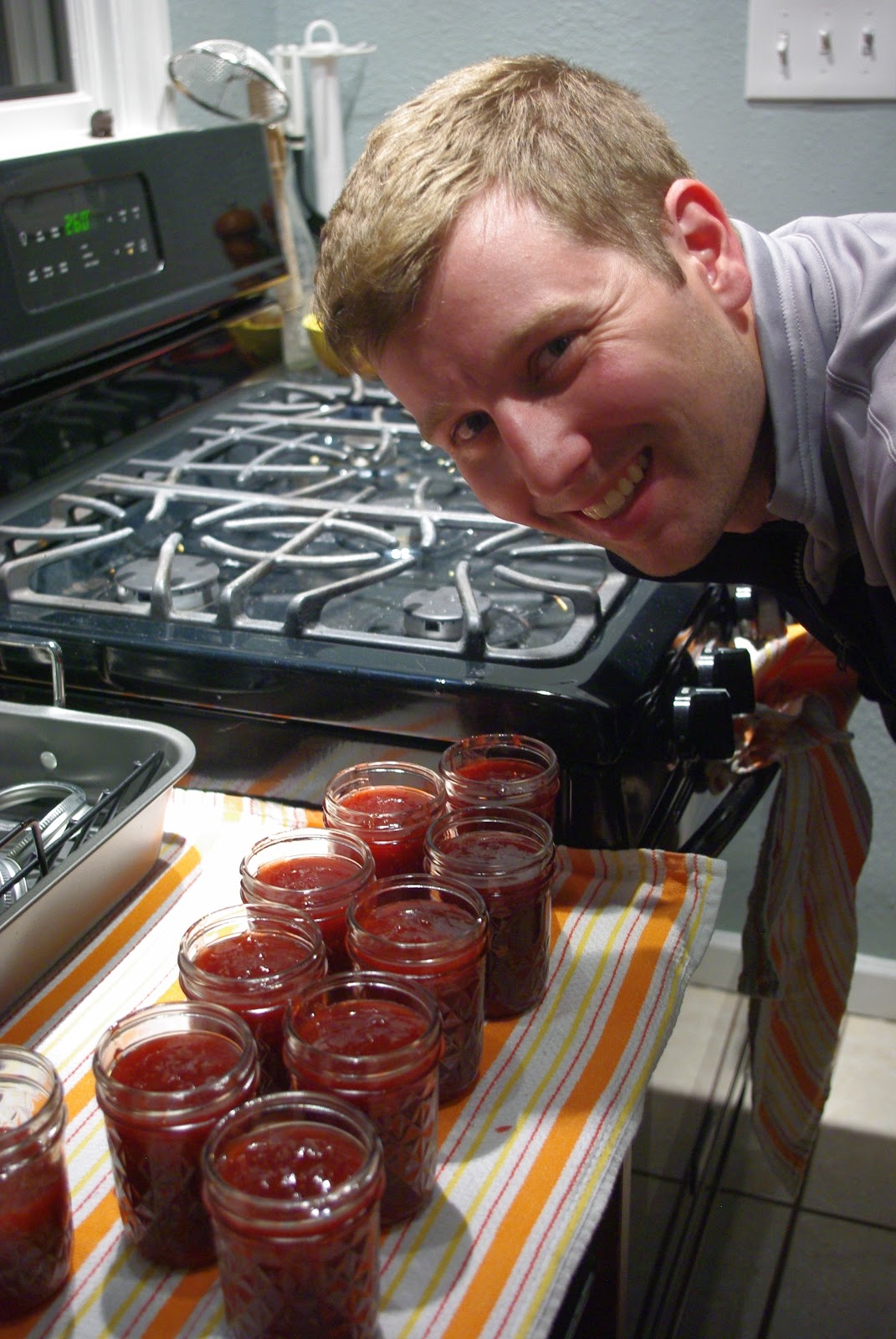
Joef and I recently discovered the joys of making homemade jam. On a whim one night, we went to the local grocery store. I asked the first staff person there where I could find the jamming jars. We found them, and then she hovered around. "What kind of jam are you making?" "Oh, I donno...we were thinking peach?" "Oh." "....Do you, um, have any suggestions?" Did she ever! About twenty minutes later, she had sent us off with recipe ideas, guidance on how to seal and purify the jars, instructions on how to make jam without pectin, proportions...pretty much everything you ever wanted to know about jamming. Including the fact that it's called "jamming", and those who jam regularly are called, as she referred to herself, "jammers".

Well, we've made three jams so far, so we're getting there! They are so delicious and fresh. And it's really not that hard. Especially when Joef does most of the work. We're still experimenting a bit with consistency, probably the toughest thing to master - we've had two that are a little runnier than ideal, and one that's a little chunky, but all three have legitimately been jam. We eat it on toast, waffles, even as ice cream topping.

The three we've made to-date have been: Strawberry-Rhubarb Bourbon, Blackberry-Raspberry Petite Syrah, and Mango. The instructions are essentially the same each time:

7 lbs of your fruit of choice (we pared and halved the strawberries, and cubed and mashed the mangoes)
7 cups of sugar
2 cups booze of your choice (or, in the case of the mango, none at all)
Juice of 1-3 lemons, depending on the sweetness of the fruit and your personal taste
12 jars

Preheat the oven to 260, and wash your jars. Put the jars and the part of the lids without the rubber into the oven for the duration of the cooking.

Combine all of the ingredients into a massive pot. The liquid will obviously boil down faster if you use a wider pot with more space for evaporation. Stir and cook on very high heat until it reaches a rolling boil, then turn down the heat slightly, while still keeping it at a rolling boil, and stir constantly until it thickens and starts to appear somewhat oily and shimmery on the surface (at least 30 minutes). To test its readiness, put a small drop on a spoon and place it in the freezer for three minutes, while continuing to cook the jam. If it's the consistency you'd want your final product to be when it comes out of the freezer, it's done. Otherwise, keep on cooking and freezer-testing as needed.

When your jam is done, take the jars out of the oven, but keep the oven on. Spoon the jam into the jars, and tighten the lids. Place back into oven for twenty minutes.

Your jam is ready when the lids pop and you can't push them down again (it means they're sealed). Once you've opened a jar, store it in the fridge. Enjoy!

Wednesday, October 10, 2012

Linguine with Raw Tomato Sauce

(from Mark Bittman's How to Cook Everything)

This is a great spin on everyday tomato sauce. It's great for our new Berkeley surroundings, where we have access to super-fresh produce - in this case, particularly Berkeley Bowl heirloom tomatoes and fresh basil from the garden (although I already killed the first basil plant and am on my second; a green thumb, I don't have!). 

This basically has all the usual components of tomato-basil sauce - tomatoes, garlic, basil - you just don't cook any of it. The garlic becomes more potent, and it's wonderfully fresh and light. The pasta warms the sauce up. It reminds us of the sauce at D'Amico and Sons in Minnesota, a favorite of Joef's when he was growing up.

So, it's quick, fresh, yummy:
2 cups roughly chopped fresh tomatoes
2 tbsp olive oil
Freshly ground black pepper
Salt to taste
2 cloves garlic, lightly smashed and then chopped
1/4 - 1/2 cup fresh basil leaves, chopped
1 lb pasta
Parmesan cheese for serving

Start your water boiling and salt it. In a large bowl (with a broad, flat bottom, and ideally enough room to hold all the pasta), combine and mash the tomatoes, oil, salt/pepper, garlic, and half the basil. (I use a large, wooden muddler) Don't mash it so much that it becomes a puree - just break it down and combine the flavors a little. The sauce can sit for up to two hours like this (or you can use it right away).

After the pasta is cooked, ladle a little pasta water into the sauce to warm it up and thin it out a little. Bittman removes the garlic at this point (he just smashes it, doesn't chop it) - I think I left it in. Toss the pasta in the sauce, adjust the seasoning as needed, top with the rest of the basil, and serve with parmesan cheese.